

AIOStreams app
Your catalogs and streams as a streaming app, on your computer, phone, tablet or TV, or in a browser.
The AIOStreams app browses and plays what your configuration finds, with your catalogs as libraries and your streams as versions, sorted and named by your formatter as in Stremio. There's nothing to self-host and no Jellyfin to install: it signs in to your configuration's media server, which runs on your AIOStreams instance. It plays streams with a link, such as debrid and Usenet ones; P2P torrents are left out.
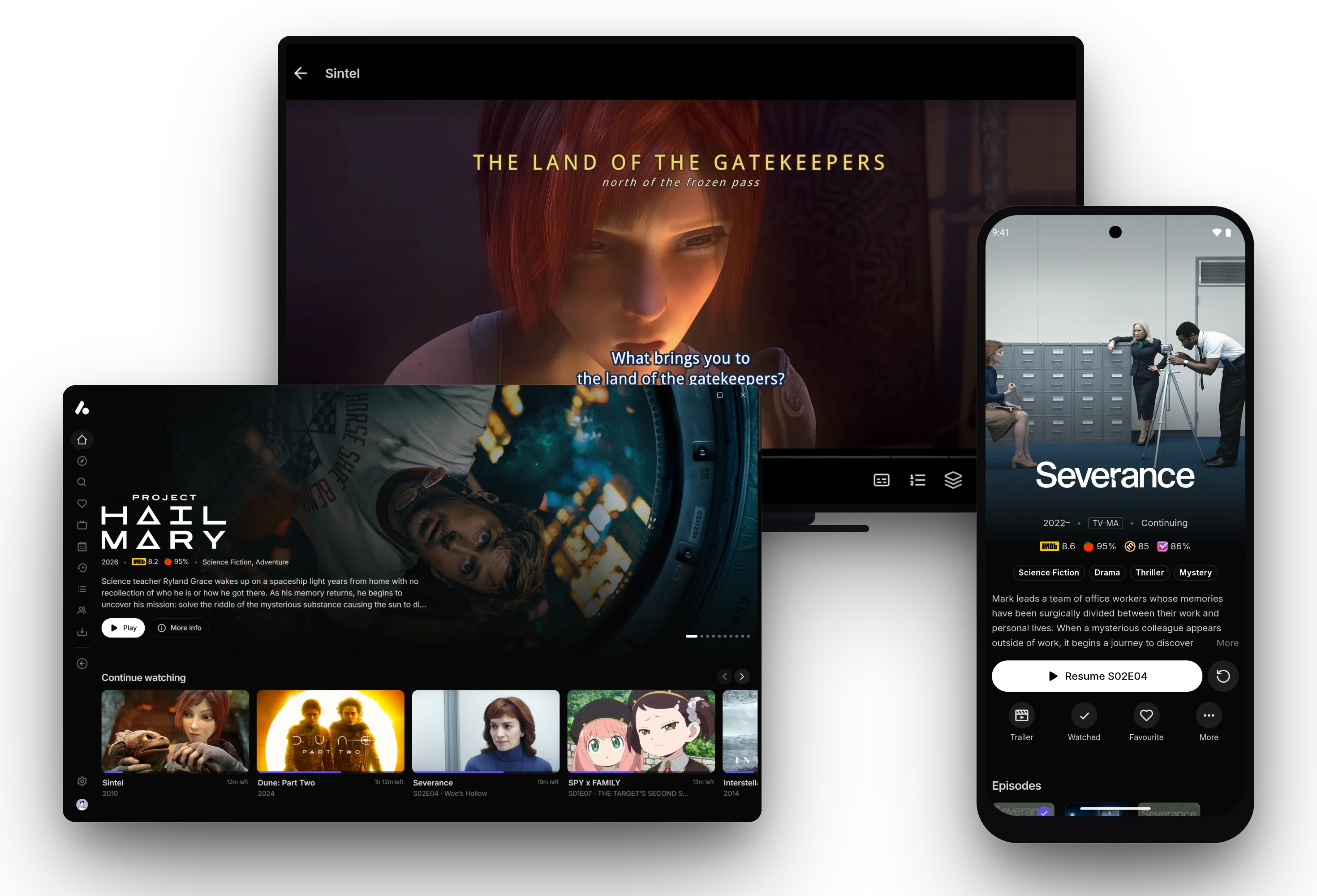
Get the app
| Your device | Get it |
|---|---|
| Any device with a browser | Nothing to install: press Open in browser under Save & Install → AIOStreams app on the configure page |
| Windows, Mac and Linux | The desktop app |
| Android phones and tablets | The Android app |
| Android TV, Google TV and Fire TV | The Android app, which has a layout made for the remote |
| LG TVs | The TV app for LG |
| Samsung TVs | The TV app for Samsung |
| iPhone, iPad and Apple TV | A browser on iPhone and iPad, or a Jellyfin app |
It is the same app everywhere: the same home page, title pages and settings. What it plays with differs. A browser plays HEVC, Dolby Vision and surround sound with its WebGPU engine, the desktop app plays nearly anything with mpv, the Android app has ExoPlayer and mpv, and the TV apps use the TV's own player.
The apps draw their screens the way a browser draws a page, with the device's web engine, and play video natively. On low-end Android TV devices and older TV sticks, moving around the app can feel slower than in apps made only for TVs. Playback isn't affected.
Signing in
The quickest way in is from the configure page: under Save & Install → AIOStreams app, Open in browser opens the app in that browser, and Open in desktop app or Open in app opens the installed app with your address filled in. Otherwise, add your server in the app with an address from Sign-in addresses there:
- The address with a sign-in picker lists your users. Pick one, then enter your configuration password, or their PIN where the instance allows PIN-only sign-in.
- On a TV, choose Quick Connect on the sign-in screen and approve the code it shows on the configure page, so nothing needs typing. With a share alias in your profile, the picker address is also short enough to type:
https://your-instance/jellyfin/u/<alias>. - Someone outside your household gets an address of their own, which signs in only their user.
After you sign in as the primary user, the app asks which user is watching, or opens the one used last on that device.
Jellyfin servers
The installed apps sign in to Jellyfin servers as well, so a Jellyfin library can be in the same app as your configuration. Add a server, or move between your servers, with Change server under Settings → Account. Files play as they are; the app doesn't ask the server to transcode them. A few things come from AIOStreams itself, such as Drop show and the details on each version, so other servers don't have them.
It works the other way too: Jellyfin apps such as Infuse and Swiftfin sign in to your configuration.
What it has
- Home opens on a featured title with Play and More info, then Continue Watching, Next Up, episodes airing soon, your favourite channels and a row for each catalog. The featured title moves on every few seconds, or after as long as you set, and a swipe or a drag moves it on sooner. While it rotates, a card you rest on with a mouse or a remote grows into a bigger preview with its details.
- Discover browses any catalog by type and genre, and Search looks through all of them, suggesting titles as you type.
- Title pages show the details, the ratings from each source your addons send, seasons and episodes, and the cast and crew, each with a page of what they have been in. Play lists the versions to choose from. Below it, a row of actions: Trailer, Favourite, Rate, Watched and the rest, which on a phone or tablet sit under More. Episodes show their title first with their air date, and Settings → Interface can blur the ones you haven't started.
- Live TV lists the channels from your addons, with a programme guide, catch-up and reminders.
- Favourites and Calendar keep what you saved and what airs next.
- Activity is your watch history, where you can mark things unwatched or remove them. The primary user also sees everyone's history and what each person is playing right now.
- Downloads on the desktop and Android apps, and saved pages that browse without a connection.
- Watch together keeps friends' players in sync, on your server or across servers, with chat and reactions.
Playing
- Paused. Left paused for a few seconds, the player dims and shows what's playing: the title, the episode and its synopsis.
- Next episode. The next episode plays on its own, and the app can ask whether you are still watching after a few in a row. It can also skip filler and recap episodes where your metadata marks them, and skip by the file's chapters.
- Playlists. Add to playlist, in a title's menu or on a film's page, puts it in one of your playlists or a new one. Playlists lists them: play one, reorder or remove its titles, or add what you are part way through. A title played from a playlist plays on to the playlist's next title rather than its next episode, and the player's Playlist button shows the rest. Shuffle plays a playlist in a mixed order that stays the same until you turn it off, and Repeat goes back to its first title after the last; each device keeps its own. Playlists are kept on the server, so Jellyfin apps see them too.
- Languages. List your audio and subtitle languages in order of preference under Settings → Audio and Settings → Subtitles. A track you pick while watching a show sets the language for its other episodes. When a version has more than one subtitle in your language, Subtitle types picks which: full subtitles, SDH, forced or signs and songs.
- Subtitles. Style them under Settings → Subtitles. ASS subtitles, such as most anime releases, keep their own styling, signs and fonts in every app, drawn with libass. To watch with a subtitle file of your own, drop it on the player or pick it with Add a file in the subtitle menu.
- Versions. Search a title's versions by words or a regular expression, save searches as quick filters that show as pills above the list, and label versions with badges, your own or a pack someone shares. See version filters and badges.
- On another device. Play on another device, on a title's page or in its menu, sends it to another device with the app open, and the app becomes its remote: pause, seek, skip, stop, and pick the audio and subtitles. While it plays, a button at the bottom of the screen brings the remote back. See who controls what.
- Other players. Choose another player under Settings → Playback → Player and Play opens versions in it: VLC, Infuse, Outplayer, IINA or another Android app where your device has them, or a link of your own. Each version also has Copy stream link.
- Mini player. Mini player in the player keeps the video going in a corner while you look around the app; tap it to open the player again. Set Back in the player under Settings → Playback → Player to open it with Back too. Not on TVs, where Live TV's preview is the only small player.
- Sound. In the desktop and Android apps, Settings → Audio sets how many channels your speakers take and mixes down what has more, passes Dolby and DTS through to a receiver format by format, and can turn other surround sound into Dolby Digital for an optical or ARC link. Dialogue boost, Night mode and a Delay for wireless headphones are there too.
Anime upscaling
The desktop and Android apps, and the WebGPU engine in a browser, can upscale anime as it plays: lines come out sharper and compression cleaner, most of all in older and lower-resolution shows. Turn on Anime upscaling under Settings → Playback → Video. It applies to titles your catalogs mark as anime, and in the desktop app and a browser U turns it on and off for what's playing, so you can compare. The WebGPU engine also takes your own shaders as .wgsl files, under Shaders in Settings → Playback → Player.

 Usual scalingAnime upscaling
It runs on the device's graphics processor, leaves HDR video and video about as large as the screen as they are, and turns itself off for a video the device can't keep up with. See the desktop app and the Android app for what each does.
Prefer your own shaders? The desktop app's mpv folder takes your mpv.conf, scripts and shaders (see its settings), and on Android, Add a shader under Settings → Android app gives the built-in mpv one, along with your mpv.conf.
Settings
Some settings are saved to your account and follow you to every device: what is featured on the home page, whether next up joins the continue watching row, the poster size and what shows under posters, and your audio and subtitle languages and subtitle types. The rest, such as the player, the subtitle style and the navigation, stay on the device, so each can suit its screen.
The navigation and home page change to suit you, under Settings → Interface. On a TV, the navigation runs along the top as floating pills, a bar or a fade, or down the side as a rail, a floating rail or a button in the corner. On a computer or a tablet held sideways, the same tabs can run along the top instead, and the tabs along the top and the bar at the bottom can show their icons alone. The bars sit on solid, frosted or liquid glass, and the featured title at the top of the home page rotates, follows the card you are on, or follows it from the corner.
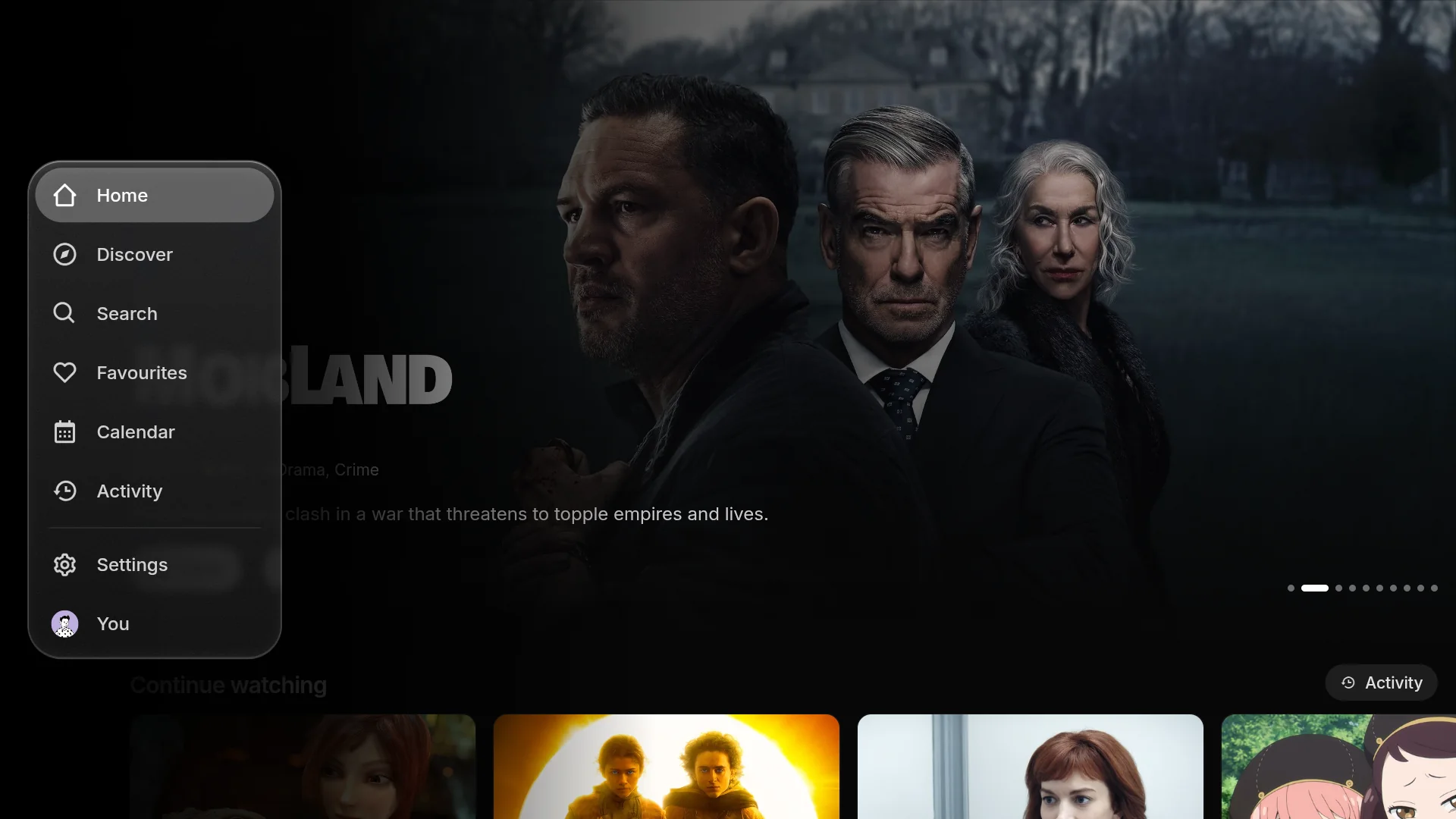
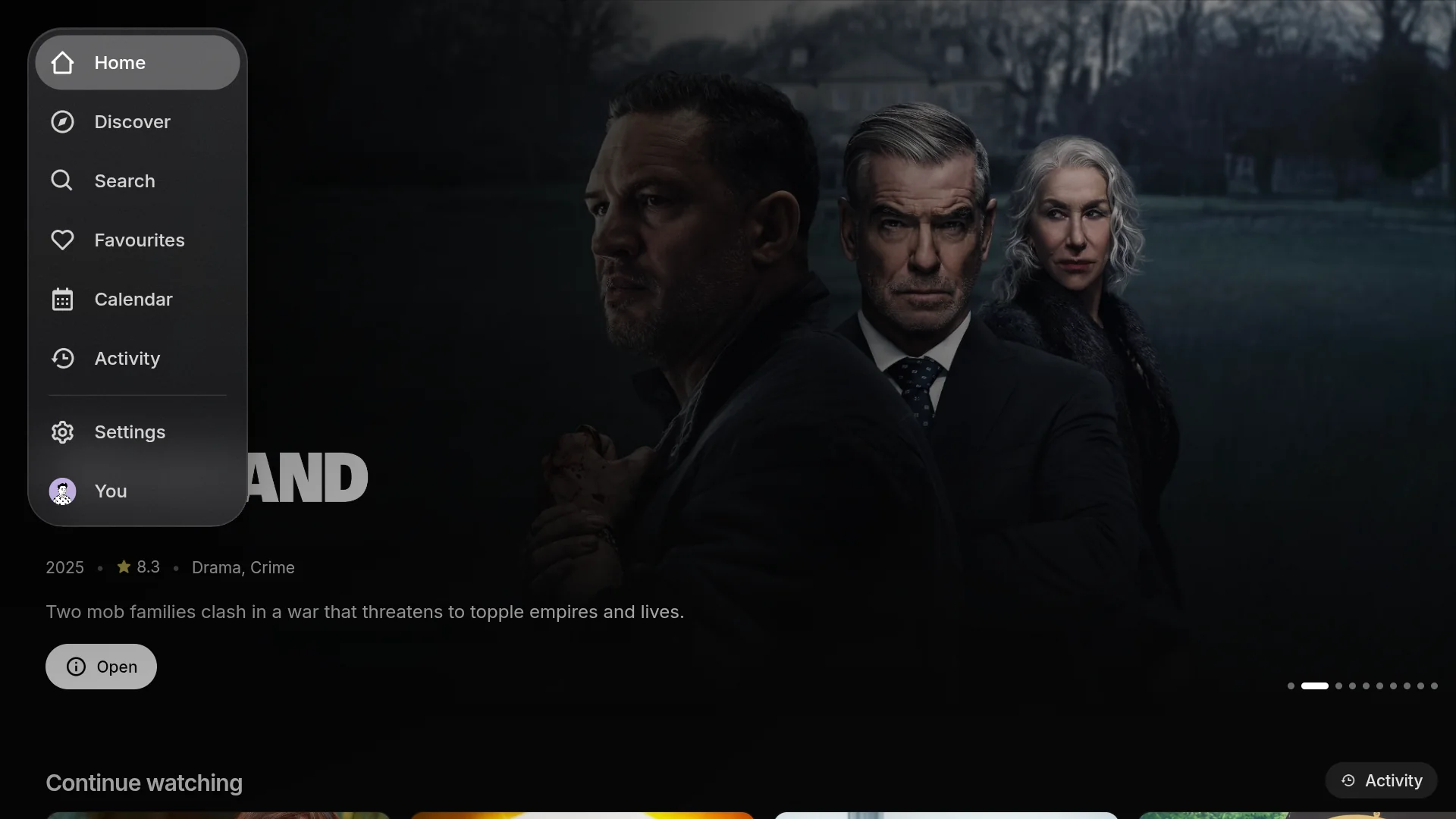
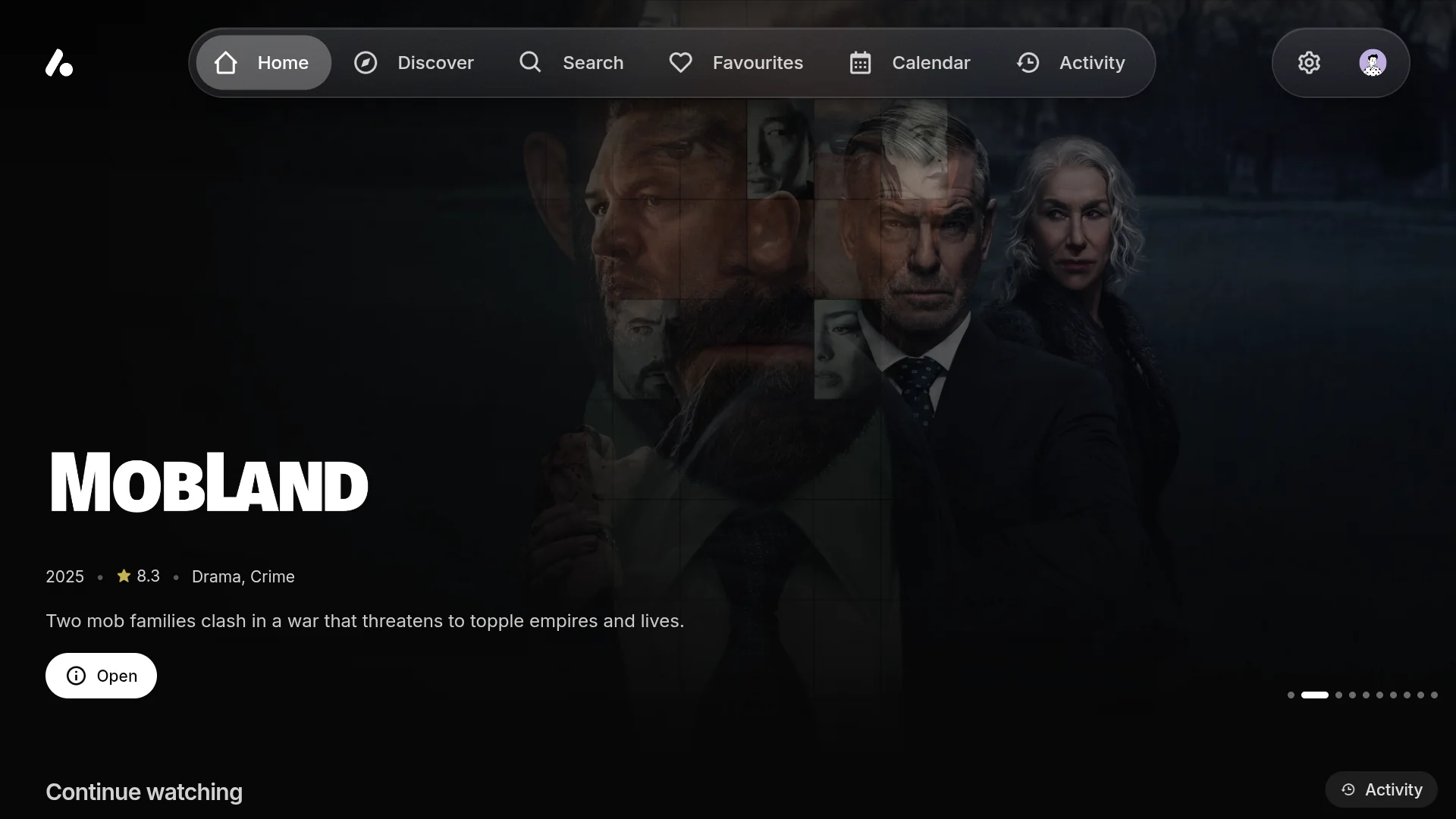
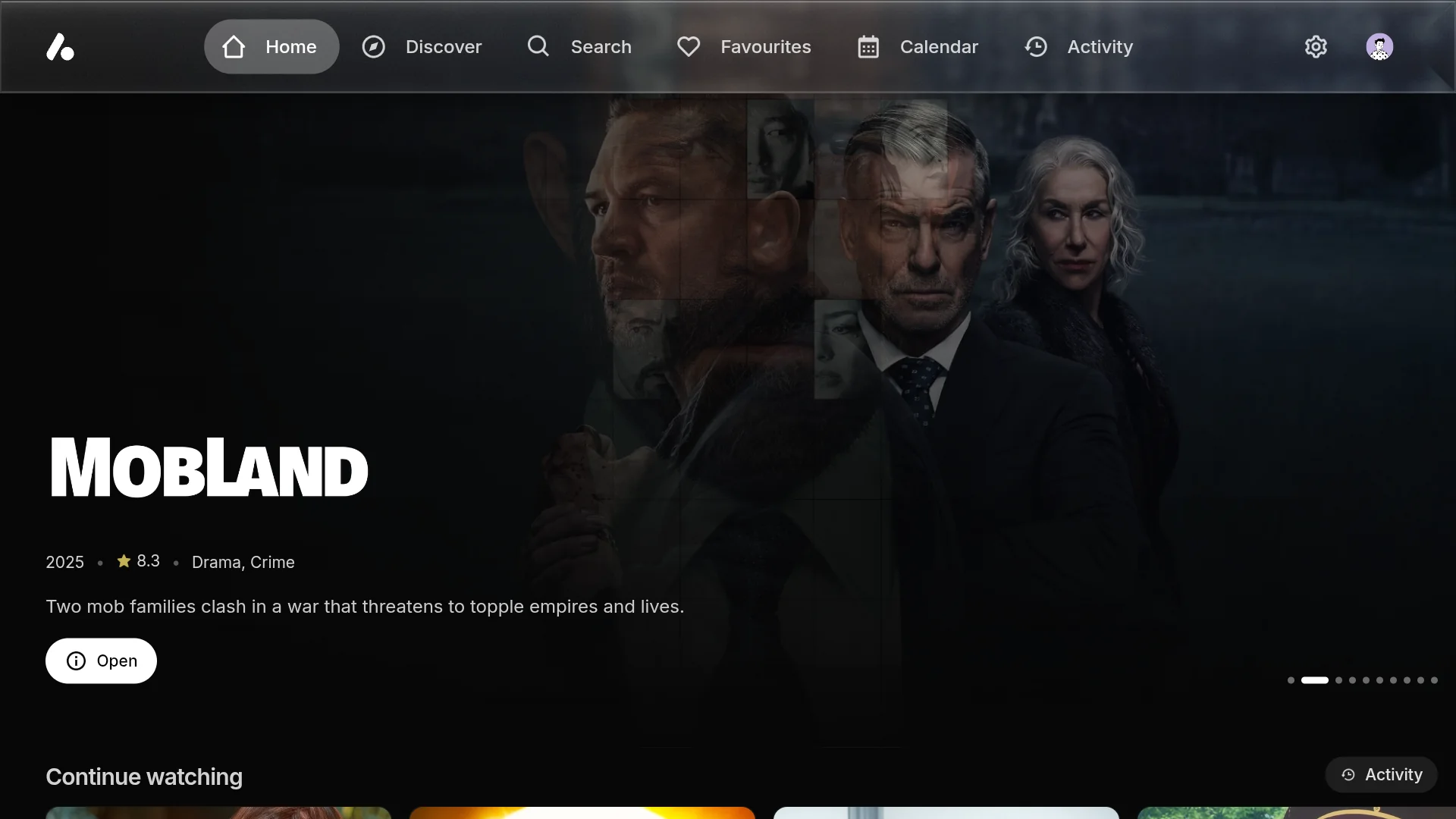
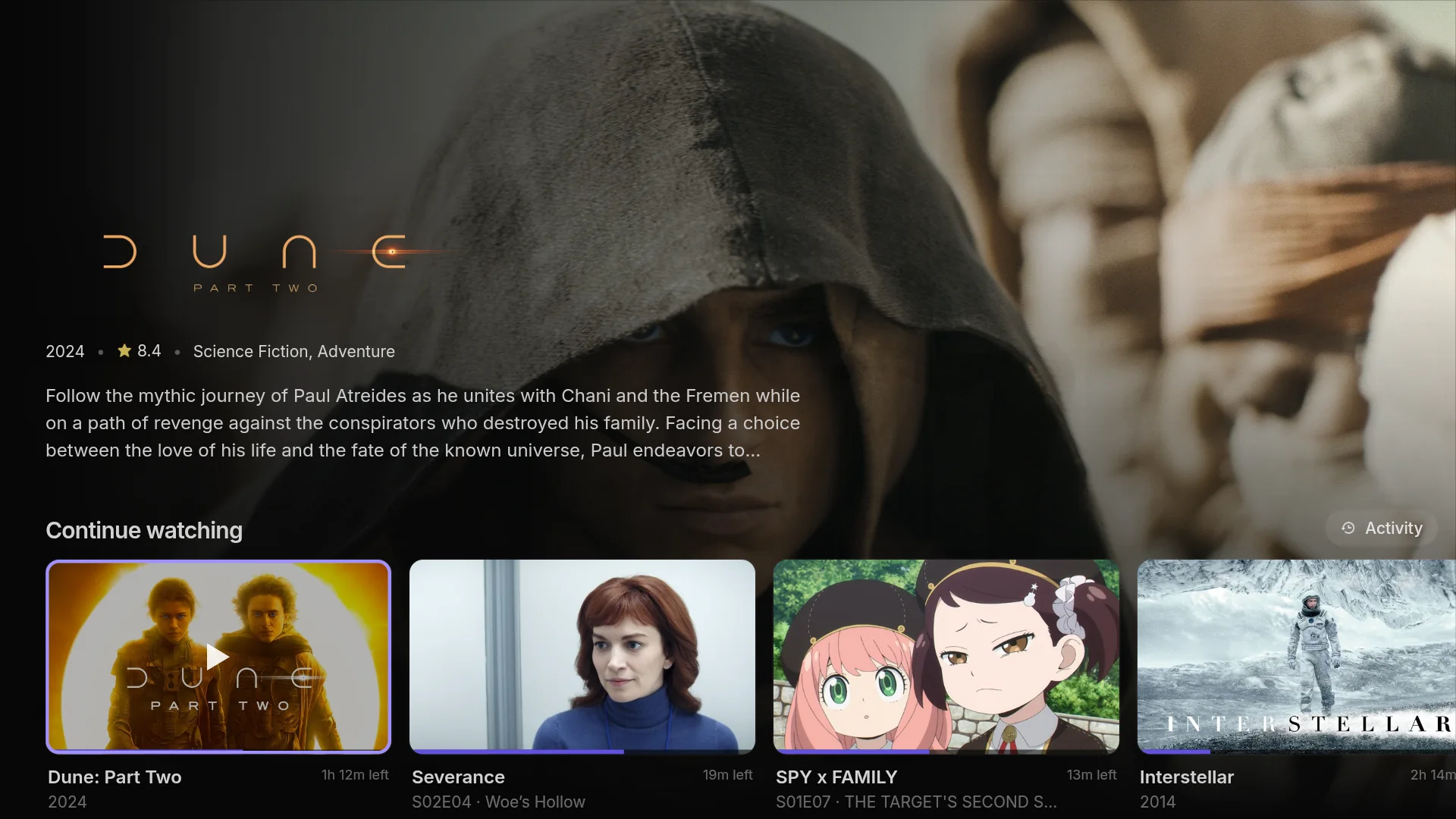
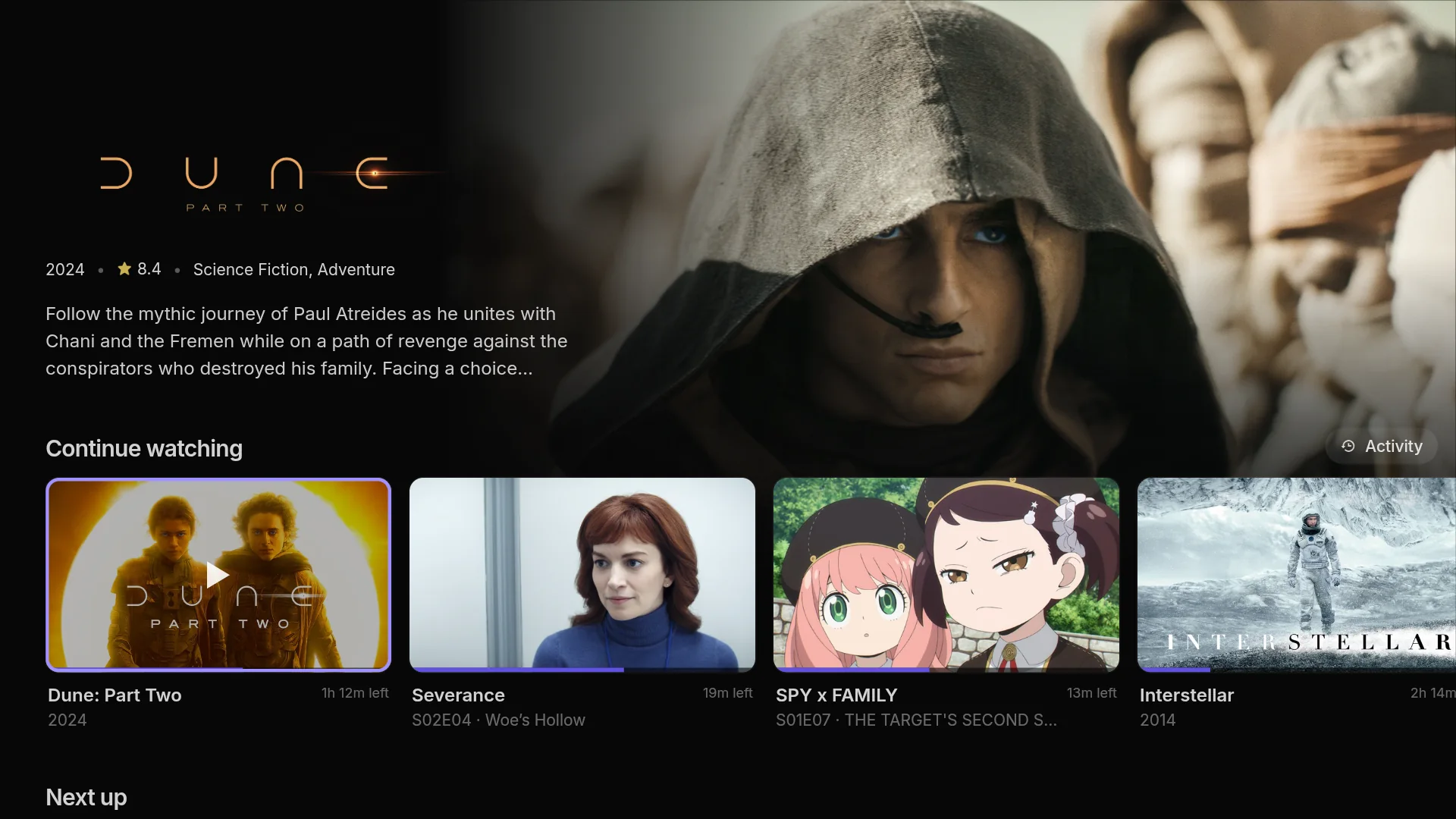

Under Settings → Theme you can pick a preset or your own accent and background colours, and add custom CSS. These follow you too. See web app themes and custom CSS for the parts of the app CSS can target.
In a browser
Press Open in browser under Save & Install → AIOStreams app. It opens on your address with a sign-in picker, and signs you straight in if you are signed in on the configure page in the same browser. Opening the plain server address in a browser works too; type your UUID or alias as well there.
- On a phone, add it to your home screen from the browser's menu and it opens like an app. The first time, you sign in again there.
- What plays. The player's WebGPU engine decodes the file in the page and draws it with the graphics card, so HEVC, Dolby Vision, AC-3, E-AC-3, TrueHD and DTS play, and the audio menu switches between a file's tracks.
- Subtitles inside the file. The subtitle tracks inside an MKV or MP4 file show in the subtitle menu: ASS, SRT, WebVTT, MP4's own text subtitles and PGS. Subtitles from your addons, or a file you add, line up with them by themselves, as in the apps.
- What it needs. A browser with WebGPU, such as Chrome, Edge or Firefox, on a page opened over HTTPS, and a file host that lets the browser read the file: streams through AIOStreams' proxy or its usenet streaming do, and so does TorBox. Otherwise, and for live channels, the browser's own player plays what the browser can decode, and a version the engine can't play goes to it at the same point. Engine under Settings → Playback → Player switches to the browser's own player for everything. For files the browser's player can't play, use another player as above, or one of the apps, which play nearly anything.